2026-11-20
[Hangil Eye Hospital] Can Atopic Dermatitis Affect Your Eyes?
Atopic dermatitis can cause chronic eye inflammation, leading to atopic keratoconjunctivitis, cataracts, keratoconus, and vision loss. Learn the symptoms, risks, and treatment options.

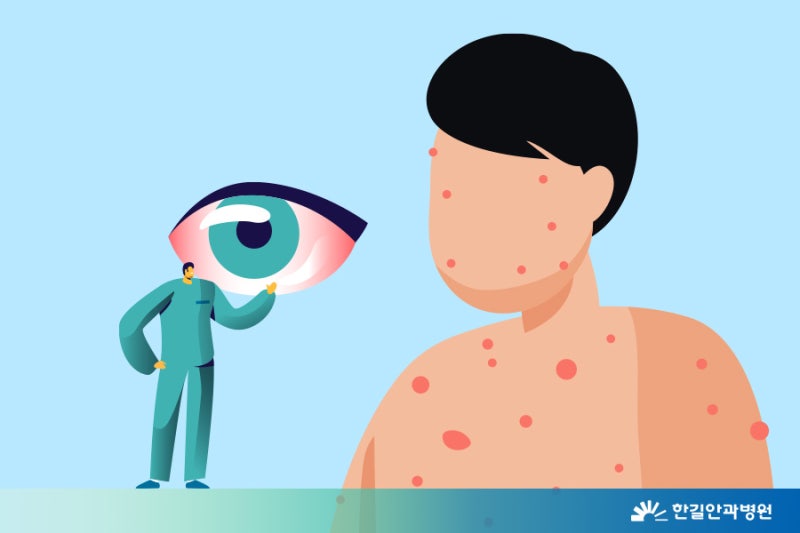
Q. Did you know that atopic dermatitis can also affect your eyes and vision?
A. If you have atopic dermatitis, chronic inflammation can develop in your eyes as well. The inflammation can cause itching, stinging, redness, and light sensitivity. In addition to atopic keratoconjunctivitis, complications such as keratoconus, cataract, and retinal detachment may occur, and in severe cases, they can lead to vision loss.
Atopic keratoconjunctivitis
Atopic keratoconjunctivitis is a type of allergic conjunctivitis in which atopic dermatitis causes inflammation not only of the conjunctiva but, in severe cases, also of the cornea (the black part of the eye). Studies report that 15–67.5% of patients with atopic dermatitis develop keratoconjunctivitis. The main symptom is itching, which may be worse during certain seasons but can also occur year-round. Besides itching, symptoms may include clear mucous discharge, redness, blurred vision, light sensitivity, and pain. While ordinary allergic conjunctivitis does not progress to involve the cornea, in atopic patients the conjunctivitis can affect the cornea and even lead to vision loss, which is why the term "keratoconjunctivitis" is used. Keratoconjunctivitis can cause persistent epithelial defects, scarring, bacterial ulcers, and neovascularization of the cornea. It may also be accompanied by keratinization and redness of the eyelid skin due to atopic changes.
Cataract
A cataract is a condition in which the clear lens of the eye turns white and cloudy, and it is a representative age-related eye disease. However, atopic patients sometimes develop cataracts severe enough to require surgery at relatively young ages, in their 30s and 40s. In fact, cataracts are found in about 25% of atopic patients. Among them, the anterior polar cataract type, in which the opacity mainly covers the central area, is typical and can cause severe vision loss in a short period. The reason cataracts occur at a young age in atopic patients is not clear. However, possible causes include trauma from rubbing or scratching itchy eyes, repeated inflammation, and side effects of steroids used for treatment.
Keratoconus
Keratoconus is a progressive condition in which the center of the cornea gradually thins and bulges into a cone shape. It usually develops in adolescence and progresses over 10 to 20 years before gradually stopping. It usually develops in adolescence and progresses over 10 to 20 years before gradually stopping. Keratoconus, which can affect both eyes or appear asymmetrically, was designated as a "nationally managed rare disease" in January of this year. The exact cause has not been clearly identified, but it is known to occur mainly in association with certain conditions such as atopic dermatitis and Down syndrome. Since patients with both conditions often rub their eyes habitually, repeated micro-trauma from eye rubbing or the secretion of inflammatory substances may lead to keratoconus.
As the shape of the cornea changes, irregular astigmatism develops, making it difficult to correct vision adequately with glasses. For this reason, rigid contact lenses are used to correct vision, but if the condition worsens, corneal transplant surgery may be needed. Intrastromal corneal ring segment implantation and corneal collagen cross-linking have also been attempted, but even after surgery or corneal transplantation, rigid contact lenses are often still needed for vision correction. Fortunately, scleral contact lenses have recently been introduced. This allows keratoconus patients for whom vision correction with conventional RGP contact lenses is difficult, or who have found lens wear uncomfortable, to correct their vision with contact lenses.
Q. What are the treatment options for atopy that has spread to the eyes?
To treat eye diseases caused by atopy, antihistamine eye drops can be applied once or twice a day, and mast cell stabilizer eye drops can be applied four times a day. If patients do not respond well to these treatments or the condition progresses to keratitis, steroid eye drops may also be needed. However, long-term use of steroid eye drops can cause serious complications such as glaucoma due to increased intraocular pressure and progression of cataracts. For this reason, it is recommended to use them only briefly for the necessary period. Also, the occurrence of complications should be checked regularly during treatment.
Atopic dermatitis can cause a wide range of eye diseases, from the front to the back of the eye, and persistent eye rubbing in response to itching around the eyes is believed to be the main cause. To prevent eye diseases, it is important to relieve itching through cold compresses and medication, and for patients to recognize the problem and make an effort not to rub their eyes. Regular eye examinations for early detection of these conditions are also important, and dermatologic treatment for the skin around the eyes should be carried out alongside.



Frequently Asked Questions
Can atopic dermatitis cause eye problems?
Yes, atopic dermatitis can cause chronic inflammation in the eyes, leading to symptoms such as itching, redness, and light sensitivity. If severe, it can lead to vision loss. In addition to atopic keratoconjunctivitis, complications such as keratoconus, cataract, and retinal detachment can occur.
What is atopic keratoconjunctivitis?
It is a type of allergic conjunctivitis in which atopic dermatitis causes inflammation not only of the conjunctiva but, in severe cases, also of the cornea. Its main symptom is itching, and it may also cause clear mucous discharge, redness, blurred vision, light sensitivity, and pain.
Can atopic patients develop cataracts?
Yes, atopic patients, including those in their 30s and 40s, can develop cataracts severe enough to require surgery. Cataracts are reportedly found in about 25% of atopic patients. The exact cause is unclear, but possible factors include trauma from eye rubbing, repeated inflammation, and side effects of steroids.
What is keratoconus, and how is it treated?
Keratoconus is a progressive condition in which the center of the cornea thins and bulges into a cone shape. Because glasses often cannot correct it adequately, rigid contact lenses are used, and corneal transplant surgery may be needed if the condition worsens. Scleral contact lenses have recently been introduced, making vision correction possible for patients who cannot be helped by conventional rigid lenses.
What is the treatment for atopic keratoconjunctivitis?
Antihistamine eye drops and mast cell stabilizer eye drops can be used. If the condition does not respond well to treatment or progresses to keratitis, steroid eye drops may be needed. Long-term use can cause complications such as glaucoma and cataract progression, so it is recommended to use them only briefly for the necessary period.
How can I prevent atopic eye diseases?
It is important to avoid rubbing your eyes and to relieve itching with cold compresses or medication. Regular eye exams are also needed for early detection, and dermatologic treatment for the skin around the eyes should be done alongside.