2026-11-13
[Hangil Eye Hospital] Pediatric Amblyopia That's Hard to Spot
Amblyopia shows no visible symptoms, so parents often miss it, especially during remote learning. Here's why it's hard to spot, how to self-check, and when to get vision tests.
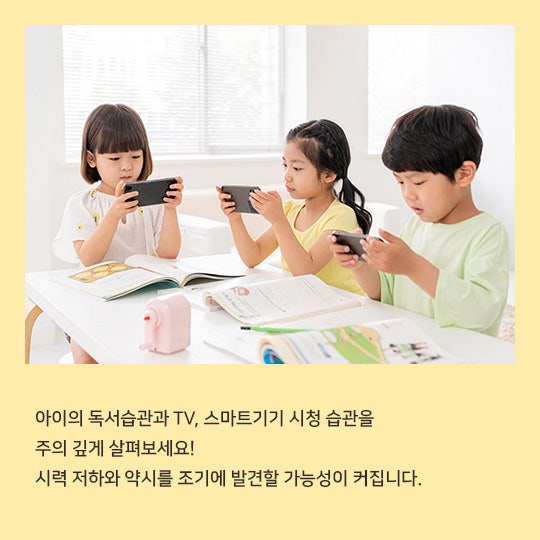
Pay close attention to your child's reading habits and their TV and smart device viewing habits!
This increases the chances of catching #VisionDecline and #Amblyopia early.
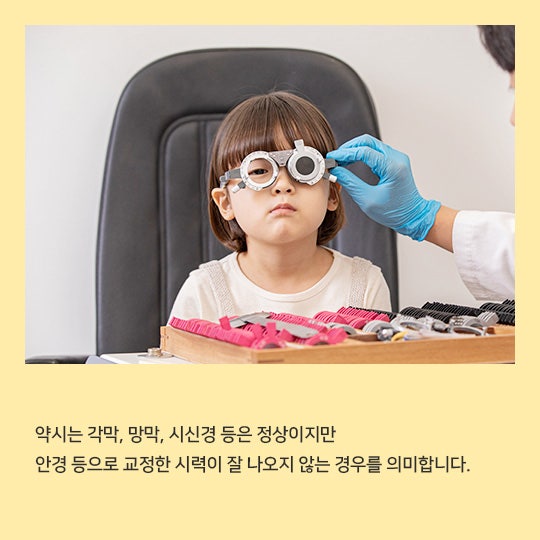
In amblyopia, the cornea, retina, and optic nerve are all normal,
but vision does not improve well even with glasses or other corrective lenses.
Unlike strabismus, it is not an outwardly visible symptom,
so parents and guardians often have trouble noticing it.
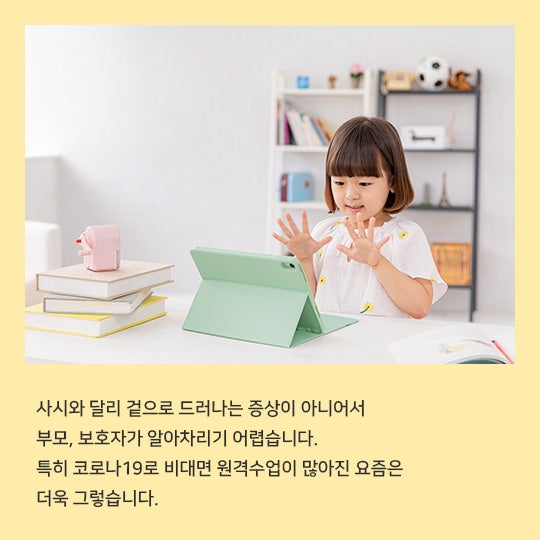
This is especially true these days, as COVID-19 has led to more remote classes.
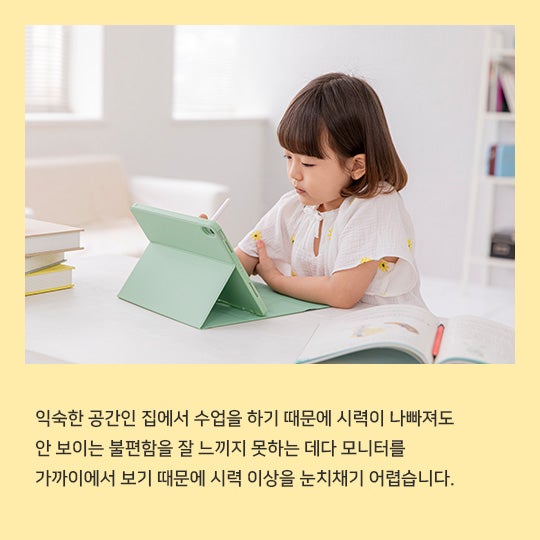
Because classes are held at home, a familiar space,
children don't easily feel the inconvenience of not seeing well, even when their vision worsens,
and because they look at monitors up close,
it's hard to notice vision problems.
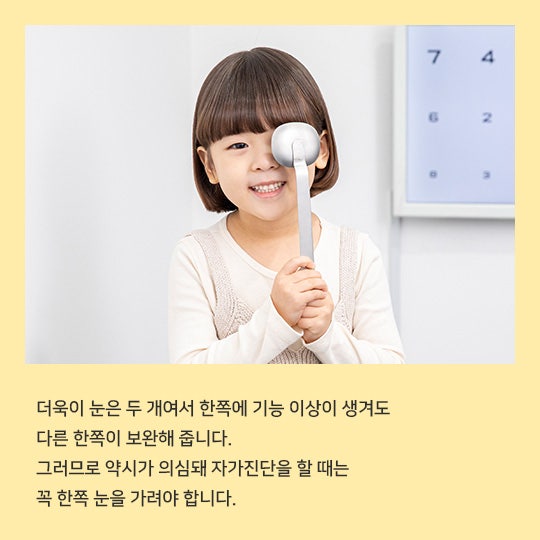
Moreover, since we have two eyes,
if one eye's function is impaired, the other eye compensates for it.
So, when you suspect amblyopia and want to do a self-check,
be sure to cover one eye at a time.
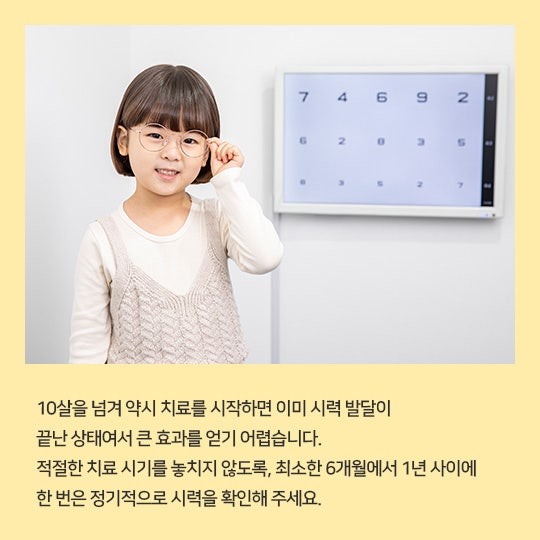
If amblyopia treatment starts after age 10,
vision development is already complete, so it is difficult to achieve significant results.
To avoid missing the right time for treatment,
make sure to have your child's vision checked regularly,
at least once every six months to a year.



Frequently Asked Questions
What is pediatric amblyopia?
Amblyopia refers to a condition in which the cornea, retina, and optic nerve are normal, but vision does not improve well even with glasses or other corrective lenses. Unlike strabismus, it is not an outwardly visible symptom, so parents and guardians often have trouble noticing it.
Why is amblyopia hard to detect?
Because there are no visible symptoms, parents and guardians often fail to notice it. With the rise of remote classes, children spend more time at home looking at monitors up close, which makes vision problems even harder to notice.
How can I do a self-check if I suspect amblyopia?
When doing a self-check, be sure to cover one eye. Because the two eyes compensate for each other, if one eye has a problem, the other eye makes up for it, so the issue is not easily noticed.
By what age should amblyopia treatment start?
It is best to start treatment before age 10. If treatment begins after age 10, vision development is already complete, so it is difficult to achieve significant results.
How often should my child's vision be checked?
It is recommended to have your child's vision checked regularly, at least once every six months to a year. This helps ensure you don't miss the right time for treatment.