2026-11-14
[Hangil Eye Hospital] Epiretinal Membrane Causing Vision Loss and Metamorphopsia: Take Extra Care If You're 50 or Older!
Hangil Eye Hospital explains epiretinal membrane, a condition that can cause vision loss and metamorphopsia, including symptoms, home self-checks, diagnosis, and surgical treatment options.
Q. What is an epiretinal membrane?
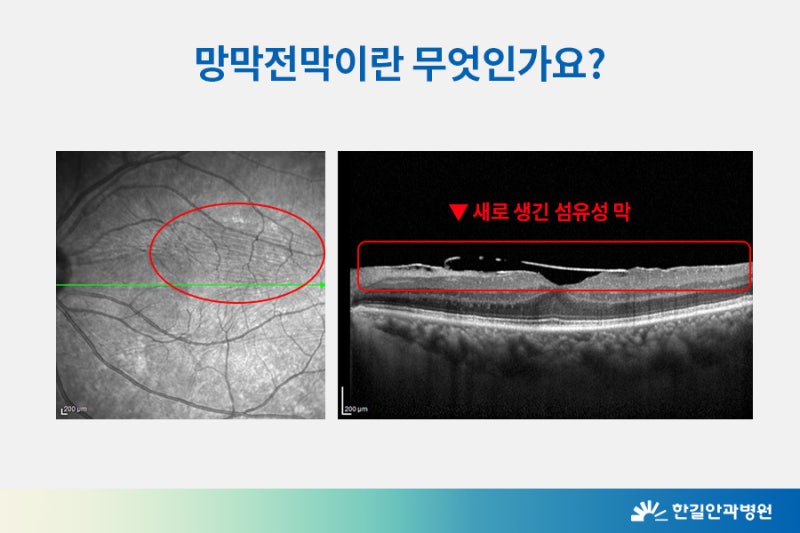
If your vision declines or objects appear bent or distorted, an epiretinal membrane may be the cause. An epiretinal membrane is a condition in which another thin membrane forms on the surface of the retina, a thin neural layer only 0.1 to 0.3 mm thick. It is also known as macular pucker. When abnormal fibrous tissue grows along the retinal surface, the membrane distorts the retina and interferes with light focusing on it. Although it is less well known than major retinal diseases that cause vision loss, such as age-related macular degeneration, diabetic retinopathy, and retinal vein occlusion, it is also the most common condition to develop in old age.
An epiretinal membrane is believed to develop when cells and extracellular matrix from the innermost layer of the retina separate from the neural tissue and form a thin membrane. Aging is thought to play a role, but the exact cause has not yet been identified. If an epiretinal membrane is left untreated and the retina becomes deformed, recovery may be difficult even after surgery. Moreover, if it affects the macula and causes macular distortion, vision may decline or metamorphopsia may occur.
*Metamorphopsia: a condition in which objects appear twisted or wavy.
Q. Can I check for an epiretinal membrane on my own?
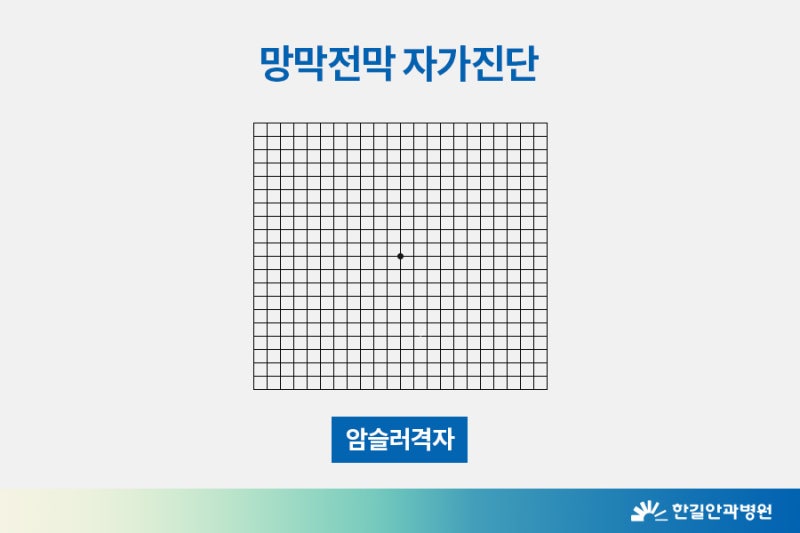
For a self-check, you can use an Amsler grid. In daily life, grid-patterned objects such as a checkerboard will also work. It is important to cover one eye when doing this. If you look with both eyes uncovered, the better eye compensates for the weaker one, making it hard to accurately detect symptoms. If squares or lines look bent or twisted, appear wavy, or if a part seems to be missing, a retinal condition may be suspected. However, this simple self-check is only a way to screen for symptoms and cannot replace the examinations and diagnosis performed at a specialized eye hospital.
Epiretinal membrane often goes unnoticed in its early stages because it does not significantly affect vision. It mainly develops with age, and if treatment is delayed and the retina and macula become severely deformed, recovery may be difficult even after surgery. It is advisable to have regular eye exams once you reach 50. — Lee Jung-hee, Chief of the Retina Center, Hangil Eye Hospital
As with most retinal diseases, an epiretinal membrane does not come with any distinct warning symptoms. By the time you notice vision loss or metamorphopsia as described above, the membrane has usually already caused considerable retinal distortion. Regular eye exams are therefore recommended so that it can be detected and treated early. Fundus examination and optical coherence tomography (OCT) can determine whether an epiretinal membrane is present and how far it has progressed.
Q. How is an epiretinal membrane treated?

An epiretinal membrane can be treated through surgery to remove the membrane. The fibrous membrane almost never peels off on its own. If vision declines or metamorphopsia worsens during observation, the fibrous membrane is removed surgically through procedures such as membrane peeling or vitrectomy. After removal, the retina, which had been wrinkled or deformed by the membrane, may gradually return to its normal shape and the condition may improve. As the retinal distortion improves, vision may also get better.



Frequently Asked Questions
What is an epiretinal membrane?
An epiretinal membrane is a condition in which a thin layer of fibrous tissue that is not normally present forms on the surface of the retina and distorts it. It is also called macular pucker and can interfere with light focusing on the retina. It is known as the most common condition to develop in old age.
What are the main symptoms of an epiretinal membrane?
Vision may decline, and you may experience metamorphopsia, in which objects appear distorted. An epiretinal membrane has no distinct warning symptoms, so by the time these symptoms appear, the retina has usually already been deformed considerably.
Can I check for an epiretinal membrane at home?
Yes, you can do a simple check using an Amsler grid or a grid-patterned object such as a checkerboard. Be sure to cover one eye while checking. If lines look bent or wavy, a retinal condition may be suspected. However, a self-check cannot replace professional examinations.
How is an epiretinal membrane treated?
An epiretinal membrane is treated by surgically removing the membrane. The fibrous membrane rarely comes off on its own. If vision declines or metamorphopsia worsens during observation, the membrane is removed through procedures such as membrane peeling or vitrectomy.
Will my vision improve after epiretinal membrane surgery?
Vision may improve as the retinal distortion gets better after surgery. The wrinkled or deformed retina may gradually return to its normal shape, which can improve the condition. However, if treatment is delayed and the distortion becomes severe, recovery may be difficult even after surgery.
What should people in their 50s or older do?
If you are 50 or older, it is advisable to have regular eye exams. Because an epiretinal membrane does not significantly affect vision in its early stages, it is easy to overlook. Fundus examination and optical coherence tomography (OCT) can determine whether it is present and how far it has progressed.