2026-09-13
Glaucoma in Incheon: The Silent Thief of Sight, Part 1 – Causes, High-Risk Groups, and Why It Is Dangerous
Glaucoma damages the optic nerve without early symptoms, risking irreversible blindness. Learn its causes, high-risk groups, and the vital role of regular eye checkups.
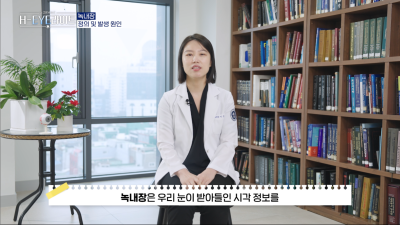
H-EYE-light - Late Stage by the Time Symptoms Appear? The Terrifying Truth About Glaucoma

Bringing you essential, easy-to-digest eye health information! Welcome to H-EYE-light.
Today's topic is the silent thief of sight: glaucoma.
Glaucoma has virtually no early symptoms, making it very difficult to detect on your own.
By the time noticeable symptoms appear, the disease has often progressed to its late stages, presenting a serious risk of irreversible blindness.
That is why ophthalmologist Dr. Jin-young Lee is here to break down what glaucoma really is and how you can protect your precious vision with essential, easy-to-understand insights.

What is glaucoma, and why does it develop?



Glaucoma is a condition in which the optic nerve—the pathway transmitting visual information from the eye to the brain—gradually weakens, leading to a progressive narrowing of the visual field.
There are two primary causes.
Glaucoma Cause 1: Intraocular Pressure Issues

The first cause involves intraocular pressure (IOP).
Inside the eye, a fluid called aqueous humor is continuously produced and drained to maintain the eye's shape and internal pressure.
What happens if the drainage pathways for this fluid become blocked?

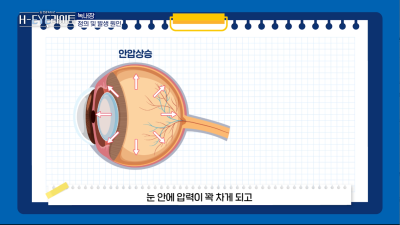
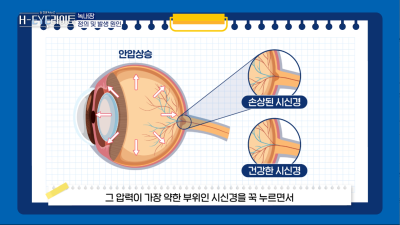
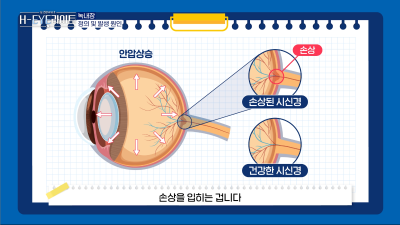
Pressure builds up inside the eye, pressing directly against and damaging the optic nerve, which is the most vulnerable structure.
This is much like blowing too much air into a balloon—as internal pressure escalates, it begins to give way at its weakest point.
Glaucoma Cause 2: Blood Circulation Issues



The second cause involves impaired blood circulation.
Glaucoma can also occur in individuals with normal intraocular pressure.
This happens when insufficient blood flow reaches the optic nerve, causing nerve fibers to die, or when an optic nerve is naturally fragile and unable to tolerate even normal levels of pressure.



Crucially, whether caused by high eye pressure or poor blood flow, damaged optic nerve fibers can never be regenerated.
Because optic nerve loss results in permanent vision loss, early detection and prompt treatment are essential.
Who should be particularly cautious about glaucoma?

While glaucoma can affect anyone, certain high-risk groups have optic nerves that are more vulnerable and prone to faster progression.
High-Risk Group 1: Family History of Glaucoma


Glaucoma has a strong genetic component.
Having a parent or sibling with glaucoma increases your risk of developing the condition by two to three times compared to those without a family history.
If you have a family history, proactive screening from a younger age is strongly recommended.
High-Risk Group 2: Adults Aged 40 and Older

Glaucoma is closely linked to aging.
As we age, the eye's ability to regulate intraocular pressure diminishes and optic nerve degeneration accelerates, leading to a sharp rise in incidence.
Anyone aged 40 and older should undergo regular eye examinations even in the absence of noticeable symptoms.
High-Risk Group 3: Individuals with Systemic Conditions or High Myopia

Vascular conditions such as hypertension and diabetes compromise optic nerve health, and patients with high myopia (severe nearsightedness) require extra vigilance.
In elongated, highly myopic eyes, the structures surrounding the optic nerve become stretched and thinned.
This thinned nerve tissue is far more susceptible to damage, even from minor pressure changes.
If you belong to any of these high-risk categories, an annual eye examination is recommended to monitor your optic nerve health, even if you feel fine.
Why leaving glaucoma untreated is dangerous


The primary reason is that glaucoma is one of the three major blinding eye diseases, alongside macular degeneration and diabetic retinopathy.




Glaucoma causes peripheral vision to fade so gradually that it often goes unnoticed, much like clothes getting soaked in a drizzle.
What makes this particularly treacherous is binocular compensation: even if the visual field in one eye begins to narrow, the other eye compensates for the missing visual data, leaving day-to-day vision feeling completely normal.
Even when one optic nerve has sustained severe damage, good vision in the other eye can lead patients to assume their eyes are perfectly healthy.


Consequently, by the time a patient notices that their visual field feels restricted and seeks medical attention, the disease has often advanced to late-stage glaucoma, with 80% to 90% of the optic nerve already irreversibly destroyed.


Leaving glaucoma untreated ultimately leads to irreversible vision loss—effectively forfeiting your remaining sight.
Please remember that once damaged, optic nerve fibers cannot be restored by modern medicine. Protect your vision through regular eye exams, even if you have no symptoms.
In this fourth episode of H-EYE-light, we covered the silent thief of sight: glaucoma, including its causes, high-risk groups, and the serious risks of leaving it untreated.
Because glaucoma is exceptionally difficult to recognize early on and damaged optic nerves cannot be regenerated, timely detection through routine eye exams is critical.
Make sure to keep your routine eye screenings up to date!
Late Stage by the Time Symptoms Appear? The Terrifying Truth About Glaucoma - Hangil Eye Hospital YouTube H-EYE-light
Hangil Eye Hospital Location
Reservations & Inquiries
Frequently Asked Questions
Can I develop glaucoma even if my intraocular pressure is normal?
Yes, glaucoma can develop even with normal eye pressure. If blood flow to the optic nerve is compromised or the optic nerve is naturally fragile, nerve damage can occur within normal pressure ranges (normal-tension glaucoma).
Can optic nerve damage caused by glaucoma be restored with treatment?
No, once damaged, optic nerve fibers cannot be regenerated with current medical technology. Because this damage causes permanent vision loss, early detection and treatment are vital to prevent further deterioration.
Who is at the highest risk for developing glaucoma?
High-risk groups include individuals with a family history of glaucoma, adults aged 40 and older, and those with high myopia or systemic vascular diseases such as hypertension and diabetes. Having a family history increases risk by 2 to 3 times, while high myopia structurally stretches and weakens the optic nerve.
Why is it difficult to notice early symptoms of glaucoma on your own?
It is difficult to detect early on due to binocular compensation. As peripheral vision slowly recedes in one eye, the fellow eye compensates for the deficit, allowing patients to function normally without realizing their vision is declining until significant damage has occurred.