2026-09-21
Eyes Uncomfortable in Winter? Dry Eye Syndrome & Epiphora Fact Check
Winter cold winds and indoor heating cause dry eye syndrome and watery eyes. Learn the root causes, reflex tearing mechanisms, and practical winter eye care tips from an eye specialist to protect your vision health effectively this season.

H-EYE Light - Winter Eye Disease Fact Check

Bringing you helpful information for your eye health! Welcome to H-EYE Light.
Today's topic is 'winter eye conditions' that flare up whenever the cold wind blows.
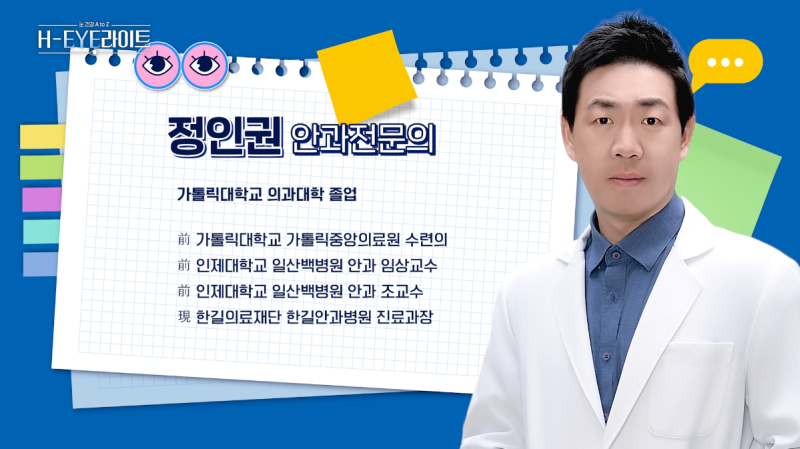
Ophthalmologist In-kwon Jeong provides easy-to-understand fact checks and care tips for 'dry eye syndrome' and 'epiphora (watery eyes)'.
Why Eyes Feel Unusually Gritty and Irritated in Winter
Do you notice your eyes suddenly feeling dry, gritty, stinging, or tearing up when winter arrives?
This occurs primarily due to two major environmental factors.
The first is the cold outdoor wind.
Wind quickly evaporates tears from the eye surface.
Once the delicate tear film that protects the eyes breaks down, irritation occurs immediately.
The second factor is dry indoor air caused by heating.
Indoor heating reduces air humidity, causing the eye surface to dry out much faster.
In other words, tears evaporate outside due to the wind,
and eyes dry out indoors due to heating.
Because both factors act at the same time,
your eyes feel significantly more gritty, dry, and irritated during the winter months.
Why Are My Eyes Tearing Up If They Are Dry?

Many people find this confusing.
You might wonder, "If my eyes are dry, shouldn't they just be parched? Why are they watery?"
In fact, these two conditions are closely connected.
Tearing generally occurs for two main reasons:
Excessive tear production, or a narrowed/blocked tear duct preventing proper drainage.
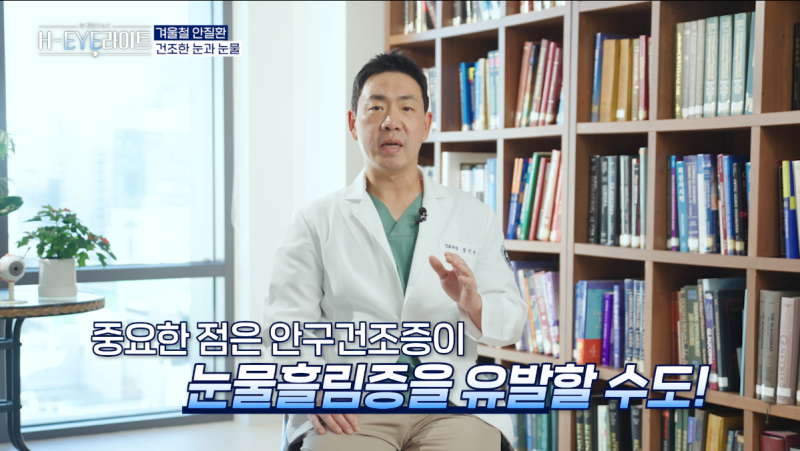
The critical point here is that dry eye syndrome can actually cause epiphora (watery eyes).
When the eye surface becomes severely dry, the eye triggers an emergency protective response,
reflexively producing large amounts of tears all at once.
This is known as reflex tearing.
Because the eyes are so dry, tears end up streaming down your face.
While it appears as though your eyes are overly watery, it may actually be the result of severe dry eye syndrome.
What Exactly Is Dry Eye Syndrome?

Dry eye syndrome isn't just a matter of feeling a bit gritty.
Medically, it stems from one of two underlying issues.
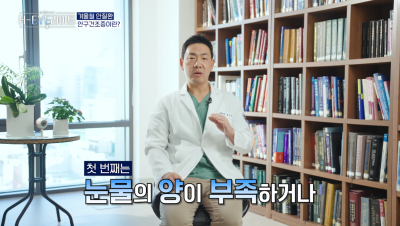
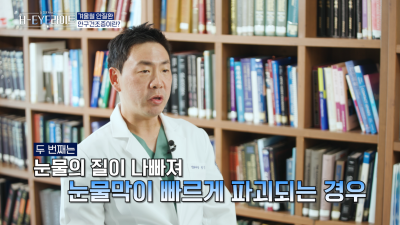
Either there is an insufficient quantity of tears,
or poor tear quality causes the tear film to break down too rapidly.
The tear film consists of three layers: the lipid (oil) layer, aqueous (water) layer, and mucin (mucus) layer.
When this balance collapses, the eyes quickly dry out.
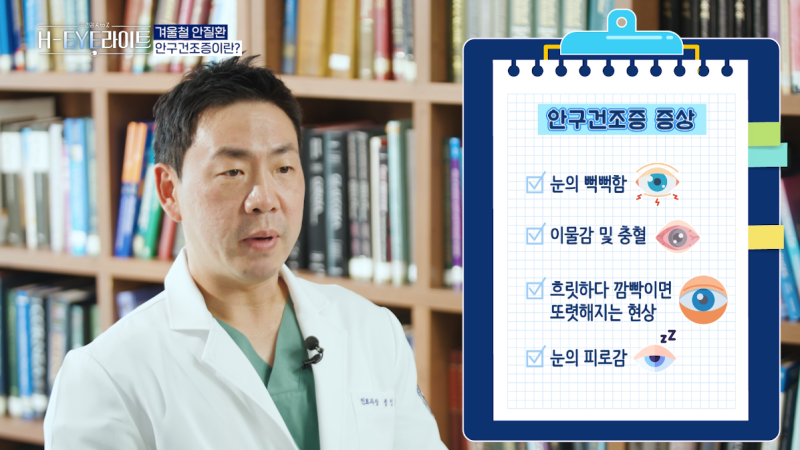
Common symptoms of dry eye syndrome include:
✅ Grittiness and stiffness
✅ Foreign body sensation and redness
✅ Vision that blurs and clears up upon blinking
✅ Eye fatigue
These symptoms tend to recur persistently.
What Is Epiphora (Watery Eyes)?

Epiphora does not simply mean your eyes produce plenty of tears.
Even when tears are produced normally,
if the tear drainage pathway (tear duct) becomes narrowed or obstructed, tears overflow and run down the face.


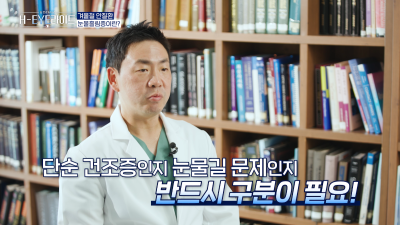
The causes of watery eyes are:
Tears overflowing due to overproduction,
or tears overflowing because a blocked tear duct prevents normal drainage.
If your eyes constantly water every winter,
it is essential to distinguish whether it is simple dry eye syndrome or a tear duct problem!
Do Dry Eye Syndrome and Epiphora Resolve on Their Own?

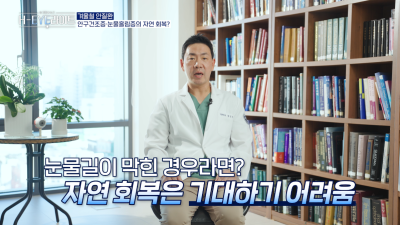
❌ Dry eye syndrome and epiphora do not resolve spontaneously if left untreated.
During winter, the environment continuously irritates the eyes, making symptoms worsen when ignored.

If dry eye syndrome is left untreated for a long period,
repeated chronic inflammation, corneal damage, and temporary blurry vision
can eventually lead to permanent visual impairment.
The same applies to epiphora.
If the tear duct is blocked, spontaneous improvement is unlikely over time.
Instead, the risk of inflammation or infection increases.
Tips to Relieve Winter Eye Discomfort

Here are practical everyday tips you can adopt.
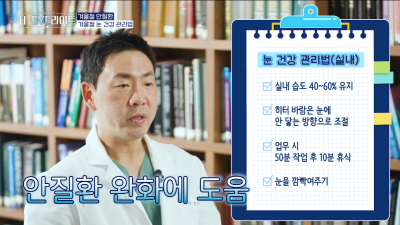
Indoors:
✅ Maintain humidity at 40–60% using a humidifier
✅ Direct heater airflow away from your eyes
✅ Take a 10-minute break after every 50 minutes of screen or detailed work
✅ Blink intentionally during breaks
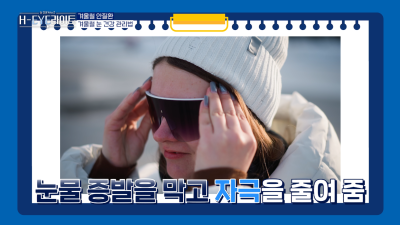
Outdoors:
✅ Wear protective glasses or sunglasses to shield your eyes from harsh winter winds
This reduces tear evaporation and minimizes external irritation.
Everyday Habits:
✅ Use artificial tears appropriately
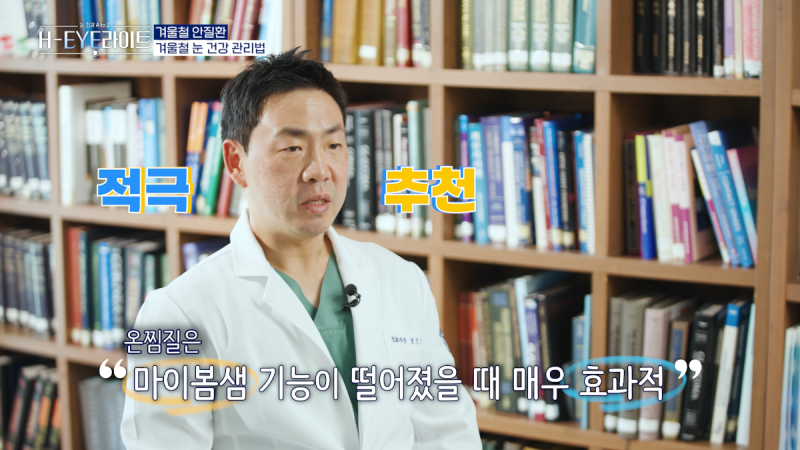
✅ Apply warm compresses to keep the eyelid lipid layer secretions smooth and healthy
Warm compresses are especially beneficial for those with meibomian gland dysfunction💚
In this first edition of H-EYE Light,
we explored winter eye conditions: dry eye syndrome and epiphora.
Remember that dry eyes can actually cause watery tearing!
If discomfort persists, do not leave it unattended—visit an eye clinic for an accurate exam and treatment.
Want easy-to-understand insights on dry eye and epiphora? Check out Hangil Eye Hospital's YouTube 'H-EYE Light'
Hangil Eye Hospital Location
Reservations & Inquiries
Frequently Asked Questions
Why do my eyes feel more gritty and dry in winter?
It is caused by the combination of cold outdoor wind and dry indoor heating. Cold wind rapidly evaporates tears from the ocular surface, compromising the tear film and causing irritation. Indoor heating lowers ambient humidity, drying the eyes even faster.
Why do my eyes keep watering when they feel so dry?
Severe dryness often triggers reflex tearing. When the eye surface becomes excessively dry, the eye reacts defensively by producing an emergency surge of tears. While tears may overflow, it is frequently the direct result of underlying dry eye syndrome.
Will dry eye syndrome or epiphora resolve on their own?
No, they rarely improve on their own if ignored. Persistent winter environmental stress can exacerbate dry eyes, leading to chronic inflammation, corneal damage, or reduced vision. Blocked tear ducts in epiphora also require proper care to prevent infection or worsening inflammation.
What lifestyle habits help alleviate winter eye conditions?
Keep indoor humidity at 40–60% and apply warm compresses to your eyes. Adjust heater vents away from your face, and wear sunglasses or protective glasses outside to block harsh winds. Using lubricating eye drops and resting eyes regularly are also effective.